Ultrasound: the probes decide what the machine can scan
Shared across radiology, obstetrics, gynaecology and urology departments.
The range above is an indicative planning figure taken from our own research, not a quotation and not an offer. buytogethr is pre-launch and has closed no pools.
What you are actually buying
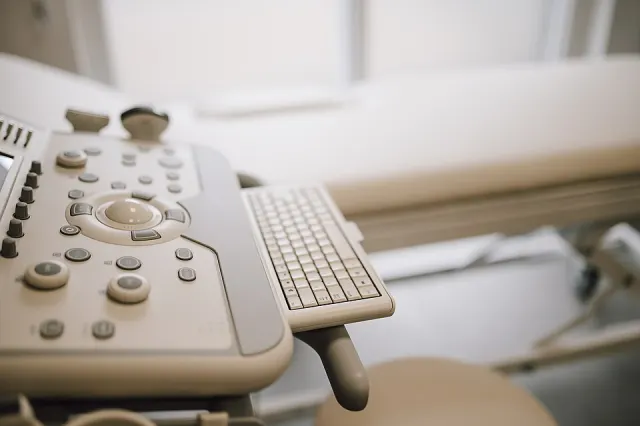
An ultrasound purchase is a console plus a set of transducers, and the transducers decide what the machine can do. One system is usually shared between radiology, obstetrics and gynaecology and urology, and each of those uses expects a different probe: curved array for abdomen and obstetrics, endocavitary for gynaecology and early pregnancy, linear for vascular and small parts, phased array where any cardiac scanning is intended. Quotes diverge on the probe count included, on licensed measurement and reporting packages, on elastography or contrast options, and on cart and monitor grade. Comparing console prices alone is the standard mistake, because one quote may include three probes and another only one.
Why ultrasound suits collective purchasing
Ultrasound pools very well provided the group buys in specification tiers rather than pretending one machine suits everyone. Unit counts are the highest of any imaging category in an institutional pool, since most facilities run several systems across departments, so aggregated volume is real. The supply side includes the major imaging OEMs alongside strong mid-market manufacturers, which gives a technical qualification and reverse-bidding process enough genuine competitors to be meaningful. The practical unit of aggregation is a tier, each with a fixed probe schedule and a named software list, so that every quote inside a tier is answering the same question.
Pin down before price
- The probe schedule: every transducer named with its frequency range, and each optional probe marked as such
- Licensed software by department: obstetric and gynaecological measurement, vascular, urology volumes
- Supply and installation only to a PNDT-registered site, with the record-keeping the Act requires
- Monitor, cart, printer, DICOM export and the reporting route into PACS
- Applications training days per department, named in the contract rather than promised verbally
What drives ten-year cost
- Probes are the consumable of an ultrasound system: they crack, delaminate and get dropped, so fix per-probe replacement prices at purchase
- Whether the maintenance contract covers probes at all, since many exclude them as standard
- Renewal terms on optional software packages, which are frequently annual rather than perpetual