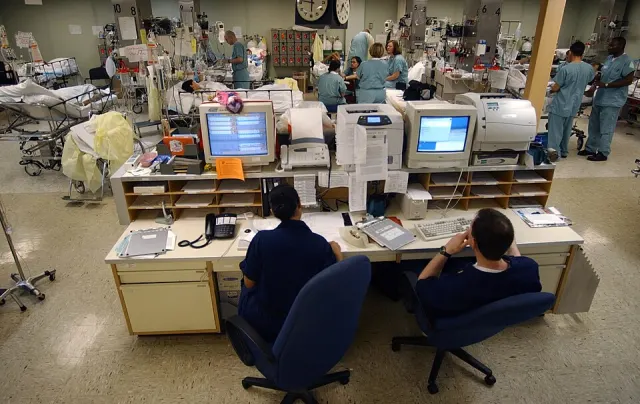
Multiparameter monitors pooled across ICU and ward bedsides
Bedside ECG, SpO2 and NIBP monitor; 120 units pooled.
The range above is an indicative planning figure taken from our own research, not a quotation and not an offer. buytogethr is pre-launch and has closed no pools.
What you are actually buying
The institution is buying a fleet rather than a monitor: a bedside unit for each ICU and ward bed, the parameter set carried by each, and usually a central station and the network behind it. Quotes diverge on the parameters included beyond ECG, oxygen saturation and non-invasive pressure, on whether parameters are enabled in software or fitted as modules, on screen size, on battery duration, and on the oxygen saturation technology - which then determines the price of every probe bought afterwards. Buyers commonly specify the bedside and leave out the central station, switches and cabling, or fit a non-modular unit to a bed that will later need invasive pressures, and find the parameter cannot be added at all.
Why multiparameter monitor suits collective purchasing
One of the better pooling candidates in critical care. Quantities per institution are high, because the requirement runs one unit to a bed across ICU and wards, so a joint requirement is among the largest a pool can put in front of manufacturers, and both global and Indian suppliers compete for it. Two honest cautions. Mixing makes within one hospital complicates staff familiarity and central station compatibility, so standardise per institution even when the tender is joint. And probes and cuffs, not the monitor, decide what the fleet costs to run, so they must sit in the same price schedule.
Pin down before price
- Parameter set per bed, and which beds require invasive pressures or capnography
- Modular or fixed configuration, and the stated cost of adding a parameter later
- Oxygen saturation technology, and whether probes and cuffs are standard or proprietary
- Central station, network requirement and integration with the hospital records system
- Battery duration for intra-hospital transfer and alarm behaviour on power loss
What drives ten-year cost
- Probes, cuffs, leads and transducers, which dominate the running cost of the fleet
- Battery replacement across every unit in the fleet
- Software licences and version support for the central station
- Annual calibration and preventive maintenance, priced per bed