Syringes and needles: standardising a continuous daily draw
Continuous daily draw from wards, ICU and OT.
The range above is an indicative planning figure taken from our own research, not a quotation and not an offer. buytogethr is pre-launch and has closed no pools.
What you are actually buying
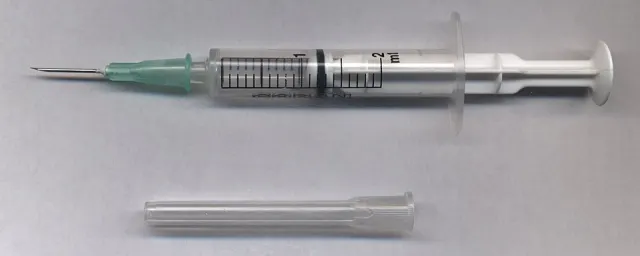
The order covers disposable syringes from 1 ml to 50 ml, in luer slip and luer lock, with or without a fitted needle, plus loose needles by gauge and length. Wards and theatre consume the common sizes continuously; ICU adds low dead-space and pump-compatible variants, and infection-control policy may require auto-disable or safety-engineered designs. Quotes differ on nozzle type, barrel and plunger material, whether graduations resist handling, sterilisation method, packaging as blister or bulk, and whether a needle is included in the rate at all. The recurring mistake is tendering a five millilitre syringe without naming the nozzle, which produces quotes that cannot be set side by side, and forgetting that syringe pumps recognise a defined syringe profile.
Why syringes and needles suits collective purchasing
Few items standardise as completely: the whole specification fits on one page and no clinical preference stands behind it. Consumption is continuous rather than seasonal, so a pool has a monthly cadence and a manufacturer can plan production against it, which is the argument that earns an institutional rate. Buyers are numerous and unconnected, and qualified manufacturers are many. The exception worth naming is the ICU. Syringe pumps recognise particular syringes, so pump-specific sizes belong in a separate lot bid against the named pump models rather than folded into the ward and theatre volume.
Pin down before price
- Volumes and nozzle type — luer lock or luer slip — per department
- Needle gauge and length, and whether the rate includes the needle
- Safety-engineered or auto-disable requirement, stated per use case
- Pump makes and models in service, named, for the ICU lot
- Sterilisation method, shelf life and batch marking on each pack
What drives ten-year cost
- Sharps disposal and needle-stick management scale with volume
- Sizes that do not match practice simply sit in store until expiry
- Splitting the annual quantity mid-year erodes the pooled rate