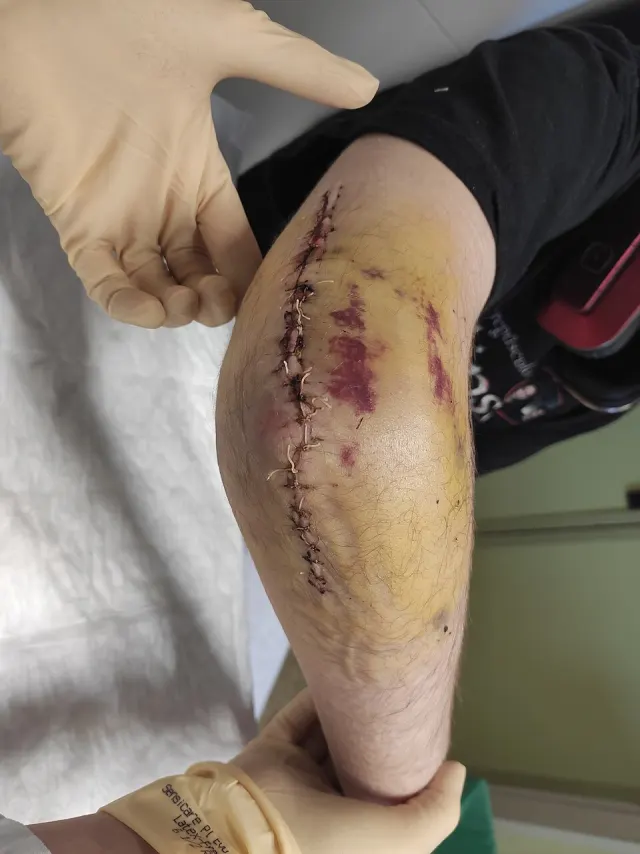
Sutures and surgical blades: where pooling stops at the surgeon
Monthly OT pack; surgical items top the standardisation list.
The range above is an indicative planning figure taken from our own research, not a quotation and not an offer. buytogethr is pre-launch and has closed no pools.
What you are actually buying
A theatre's suture list is a matrix, not a line. Absorbable and non-absorbable materials, each in a range of USP sizes, each mounted on a needle described by curvature, point geometry, length and wire strength, in a stated strand length and pack presentation. Blades are simpler: numbered profiles on a matching handle fitment, supplied sterile. What separates quotes is largely the needle — its metallurgy, how it holds in the driver, whether it bends or holds in dense tissue — alongside coating and knot behaviour on the strand. Buyers go wrong by collapsing the matrix into a rate per box. A suture that closes fascia acceptably for one surgeon is refused by another, and the substitution is discovered in theatre rather than in the tender file.
Why sutures and surgical blades suits collective purchasing
This pools less cleanly than the rest of the consumable basket, and it is fairer to say so. Blades standardise completely and can be aggregated without argument. Sutures cannot, because surgeon preference is a clinical variable, and the founder correspondence is explicit that aggregation must not compromise clinical specifications. The workable route is to split the list: pool the routine, high-turnover sizes every participating theatre already uses, record named exceptions per surgeon in writing before bidding, and aggregate those exceptions only where several institutions turn out to have specified the same thing.
Pin down before price
- Material, USP size, strand length and pack count for each line
- Needle curvature, point geometry, length and holding strength
- Coating, and for absorbables the retention and absorption profile
- Blade numbers, handle fitment, sterile presentation and expiry
- The surgeon exception list, closed and signed before bids are invited
What drives ten-year cost
- Slow-moving sizes reaching expiry when the matrix is ordered too wide
- Re-procurement if a theatre rejects a substituted line mid-contract
- Sharps handling and disposal for both needles and blades