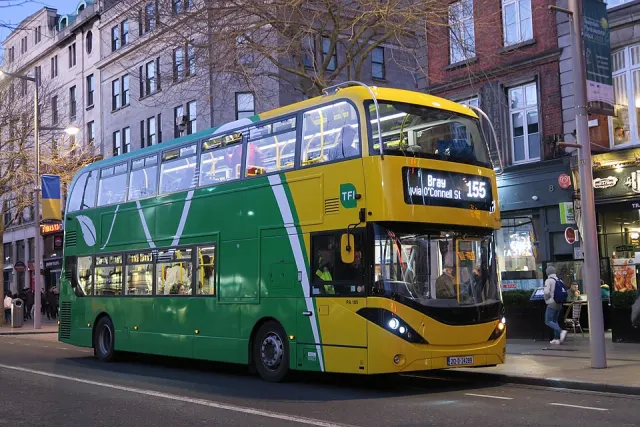
Traction battery packs taken as a service, not as an asset
Provider retains battery; school pays monthly or per-kilometre fee.
The range above is an indicative planning figure taken from our own research, not a quotation and not an offer. buytogethr is pre-launch and has closed no pools.
What you are actually buying
Here the school contracts the use of a battery rather than the battery itself. The provider owns the pack, fits it to a bus the school owns, and is paid monthly or by the kilometre. What is really being bought is capacity over time: usable energy, a guaranteed state-of-health floor at the end of the term, replacement when the pack drops below it, and a response time when a pack fails mid-week. Proposals vary on flat fee against per-kilometre pricing, what happens when routes lengthen, ownership at term end, whether swapping or in-place charging is assumed, and who owns the telematics data. The common error is comparing a monthly fee with a purchase price without reducing both to cost per kilometre over the same years.
Why traction battery pack (battery-as-a-service) suits collective purchasing
The founder calls this the most practical of the electrification models, because it moves the most expensive component off the school's balance sheet. It pools in an unusual way: the provider's risk falls as the fleet grows, since more buses across more routes make degradation predictable and allow packs to be reallocated, so a group of schools is genuinely a better counterparty than any single school. Lenders also underwrite an organised fleet more readily than one institution. The trade is commitment. The group must agree one contract and hold together for its term, and a school leaving mid-term is harder to absorb than a cancelled order.
Pin down before price
- Usable capacity now and the guaranteed state-of-health floor at the end of the term
- Fee basis, monthly or per kilometre, and the treatment of kilometres above and below the assumption
- Replacement trigger and the response time for a failed pack during term time
- Ownership at term end, and the exit terms if one school leaves the group early
- The charging assumption the contract depends on: depot tariff, charge window, swap or in-place
What drives ten-year cost
- The whole fee stream over the term, reduced to cost per kilometre and set beside an owned pack
- Electricity at the depot tariff, which the fee usually excludes
- Insurance and liability for a pack the school operates but does not own
- Escalation clauses and the index they follow