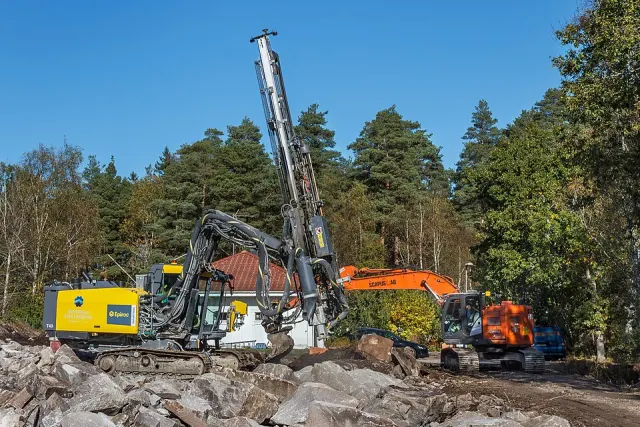
Construction equipment: earthmoving, concrete and lifting plant
Largest ticket in the table; $9.24bn Indian market, high competition.
The range above is an indicative planning figure taken from our own research, not a quotation and not an offer. buytogethr is pre-launch and has closed no pools.
What you are actually buying
The purchase is a machine, its attachment set and its availability over the years it works. That covers earthmoving plant such as excavators and backhoe loaders, concrete plant such as batching units and transit mixers, and lifting plant such as cranes and builders' hoists. Quotes diverge on emission stage and local compliance, operating weight, boom and bucket configuration, tyre or undercarriage specification, warranty expressed in hours against months, operator training, and the distance to the nearest service branch. Buyers most often specify by engine power or by brand rather than by the duty the site needs, cubic metres per hour, lift height, load at radius, and then find the attachments and ground engaging tools quoted as separate lines.
Why construction equipment suits collective purchasing
The founder ranks construction equipment eighth of fifteen construction categories, with high group-buy potential and a verdict of very good, but also high competition and a place later in the launch order behind lifts, solar, HVAC, generating sets and fire-fighting systems. It pools because buyers are fragmented, usually buying one machine at a time, specifications standardise around duty cycles, and manufacturers value a confirmed order book. It pools less cleanly than a lift, because site requirements diverge and much of the fleet is hired rather than owned. A pool works when several buyers want the same class of machine inside the same window.
Pin down before price
- Duty stated in site units: cubic metres per hour, lift height and reach, load at radius
- Emission stage and any compliance the site, client or state requires
- Attachment and ground engaging tool schedule quoted within the machine price, not beside it
- Service branch distance, committed response time and a parts availability undertaking
- One commercial basis for all bidders: outright purchase, lease or wet hire, never mixed
What drives ten-year cost
- Fuel burn per working hour multiplied by realistic annual utilisation
- Undercarriage or tyres and ground engaging tools, which recur long before any overhaul
- Service contract and spare parts pricing across the ownership period, plus the operator
- Residual value, which follows logged hours and a complete service record