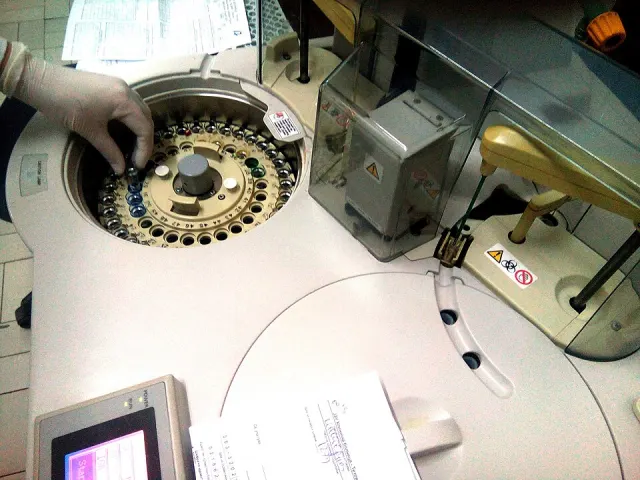
Biochemistry analyser: pooled purchase and reagent contract
Automated clinical chemistry with monthly reagent pull-through.
The range above is an indicative planning figure taken from our own research, not a quotation and not an offer. buytogethr is pre-launch and has closed no pools.
What you are actually buying
What an institution buys here is rarely just an instrument. It is an analyser of a particular throughput class, a defined test menu, and the reagent, calibrator and control supply that keeps it running for years afterwards. Quotes diverge on the things that are easy to miss: whether the system is open to third-party reagents or closed to the manufacturer's own, how many tests an hour it manages with the ISE module fitted, onboard cooling and sample positions, and the water and power conditioning the room must provide. The common error is to compare instrument prices and sign the reagent schedule later. By then the price per reportable test, which is the number that actually governs the laboratory's cost, is no longer open to competition.
Why biochemistry analyser suits collective purchasing
Clinical chemistry standardises unusually well. The routine menu a mid-size hospital or teaching laboratory runs, covering liver, renal, lipid and glucose panels, is close to identical from one institution to the next, so a common technical specification can be agreed without touching clinical judgement. Buyers sit alone in hundreds of independent hospitals, nursing homes and college laboratories, while the manufacturers and their authorised distributors are few. Pooling matters most on the reagent side: a committed multi-institution test volume is exactly what a supplier prices against, and it is the recurring spend rather than the box that decides the ten-year figure.
Pin down before price
- Open or closed reagent system, and whether third-party reagents are permitted
- Throughput per hour with the ISE module fitted, not the headline figure
- Full test menu quoted with a price per reportable test, held for the contract term
- Onboard reagent cooling, sample positions and minimum sample volume
- Water quality, power conditioning and bidirectional LIS connectivity
What drives ten-year cost
- Reagents, calibrators and controls at your real daily workload, not at rated throughput
- Tests lost to reagent shelf life once a pack is opened at low volumes
- Lamp, cuvette segment and ISE electrode replacement
- Service contract, application support and the response time written into it